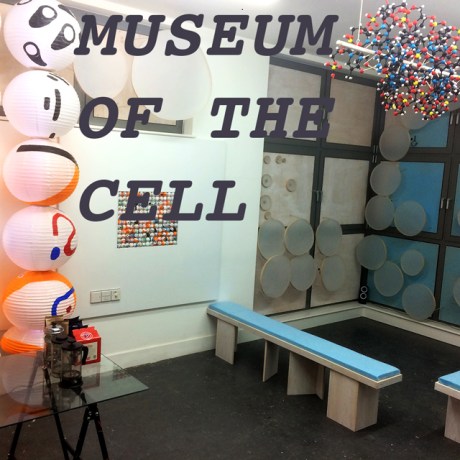
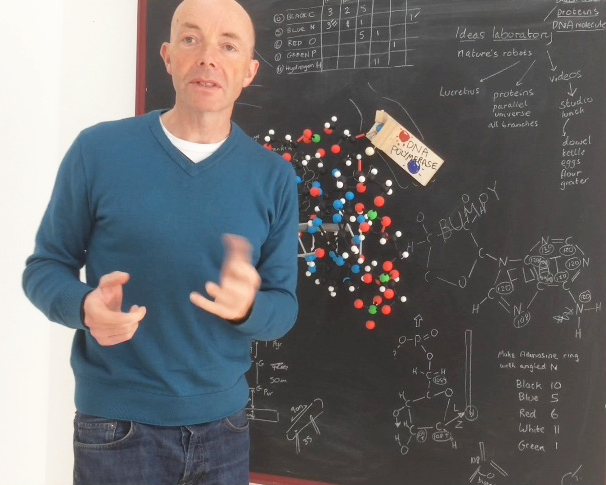
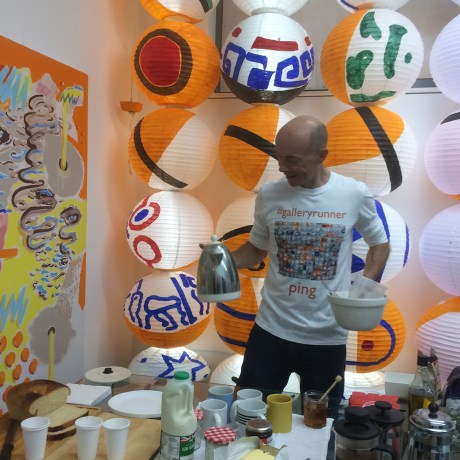
I opened The Museum of the Cell in September 2019 and set it up to coincide with the Peckham Festival. The aim is to offer a rich and vibrant learning experience to both Peckham locals and my own students.
The idea of a pop-up museum came from my collaborations with ACME open studios, Peckham Festival and Tension Fine Art, a gallery that has shown and promoted my science and education-based artworks. The Museum of the Cell also has teaching facilities where I hold tutorial classes and teach online using Zoom and Skype.
The Museum is also supported with online videos which I prepared after the first open day. I often use these as part of the tutorials to convey difficult ideas in biology.
The photographs and videos below document the various exhibits and explain the ideas behind them.
Enjoy!
1) Video 1: The Camera Obscura, and how it models the eye.
2) Video 2: Bread Making Chemistry.
3) Video 4: ATP, the energy molecule.
4) Video 6: Ribosomes and Protein Synthesis.
Protein animation: From DNA to Proteins.
Protein animation: What is a Protein.
Does a hammer always fall faster than a feather? Click below to find out.
Apollo 15: Dropping a hammer and feather on the Moon.
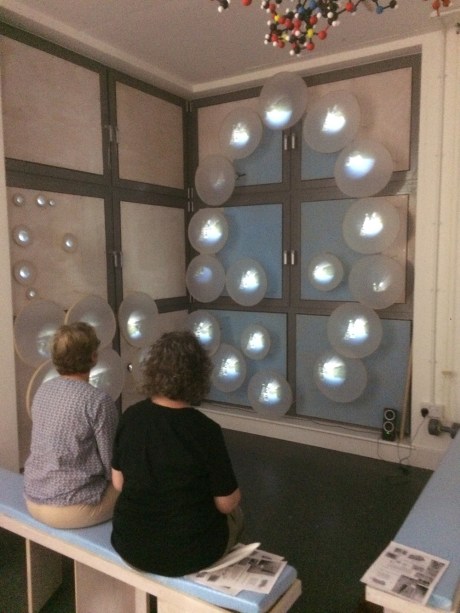
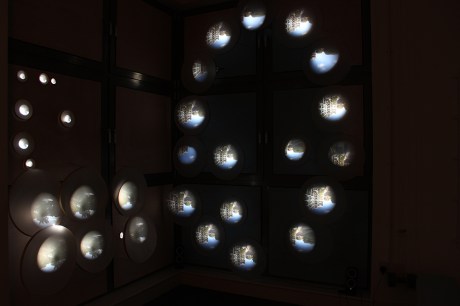
Section 1: The Camera Obscura. When visitors first saw this exhibit, many thought it was done with electronic trickery. But it wasn’t! The light comes into a darkened room through small holes cut into the window shutters. It lands on tracing paper carrying all the colour of the outside world with it. Magnifying glasses help focus the images. The evolutionary story, which this emulates, starts with the simple light sensors of scuttling woodlice, running for cover. Higher organisms evolved with these sensors embedded in cavities allowing them to create more complicated images. In this artwork we have a multitude of eyes peering up and down Trafalgar Avenue and St George’s Way, catching the landscape outside and the occasional 63 or 363 bus juddering past.
Section 2: The chemistry of bread making. Kneeding makes the bread dough rubbery and elastic as the action causes chemical bonds to form amongst the network of gluten fibres. Yes, modern flour has perhaps been customised to have too much of this stuff! The yeast then fills this rubbery network with carbon dioxide gas!
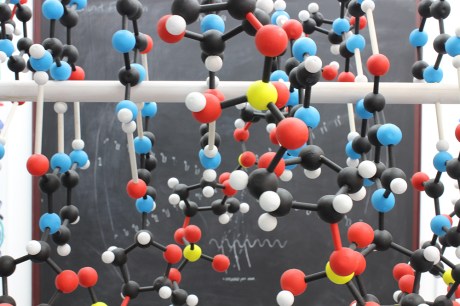
Section 3: The DNA spiral. This intricate scale model represents the spiral of a DNA molecule wound around a broom handle. After all, this was made in an artist’s studio! The coloured beads were all painted and drilled at the right angles using a homemade jig. Here’s the the thing about giant molecules. The shape of the whole all depends on the local shapes of the individual atoms and their relations to their neighbours.
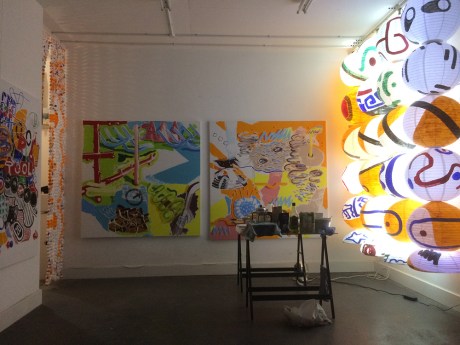
Section 4: Proteins! More than meat and soya, proteins are tiny microscopic machines. They move around inside us powered by the hurricane speeds of clanking molecules bashing about in our cells and various twitching legs. The large curtain of hanging ping-pong balls are designed to emulate the membrane of a cell. The balls have symbols and images written on them with felt tip and paint. They form larger patterns and sequences showing the complex machinery of proteins that grant or bar entry to any living cell.
.
.
.
.
.
.
.
.
.
.
.
.
.
.
.
.
.
.
.
.
.
.

